
Evidence-led planning guide
Boracay weather: choosing a date without false guarantees
Climate guidance helps narrow a date window; it cannot promise the weather for one beach at one hour. This page separates long-range planning from the operating decision made close to the event.
01
The national climate baseline
PAGASA describes the Philippines as having a rainy and a dry period at national level, while regional rainfall patterns differ. That distinction matters: a national month label is not a site-specific event forecast.
The editorial baseline here was reviewed on 21 July 2026. The linked PAGASA release records the 2026 rainy-season announcement; later advisories always take priority.
02
Dry-season planning is still risk planning
The manifesto uses November to May as an early dry-season planning window and January to April as preferred months. These are portfolio baselines, not guarantees; isolated rain, wind and rough water remain possible.
Peak-season demand can affect venue and supplier availability. Any seasonal coefficient must be shown before approval, and current quotations replace generic assumptions.

03
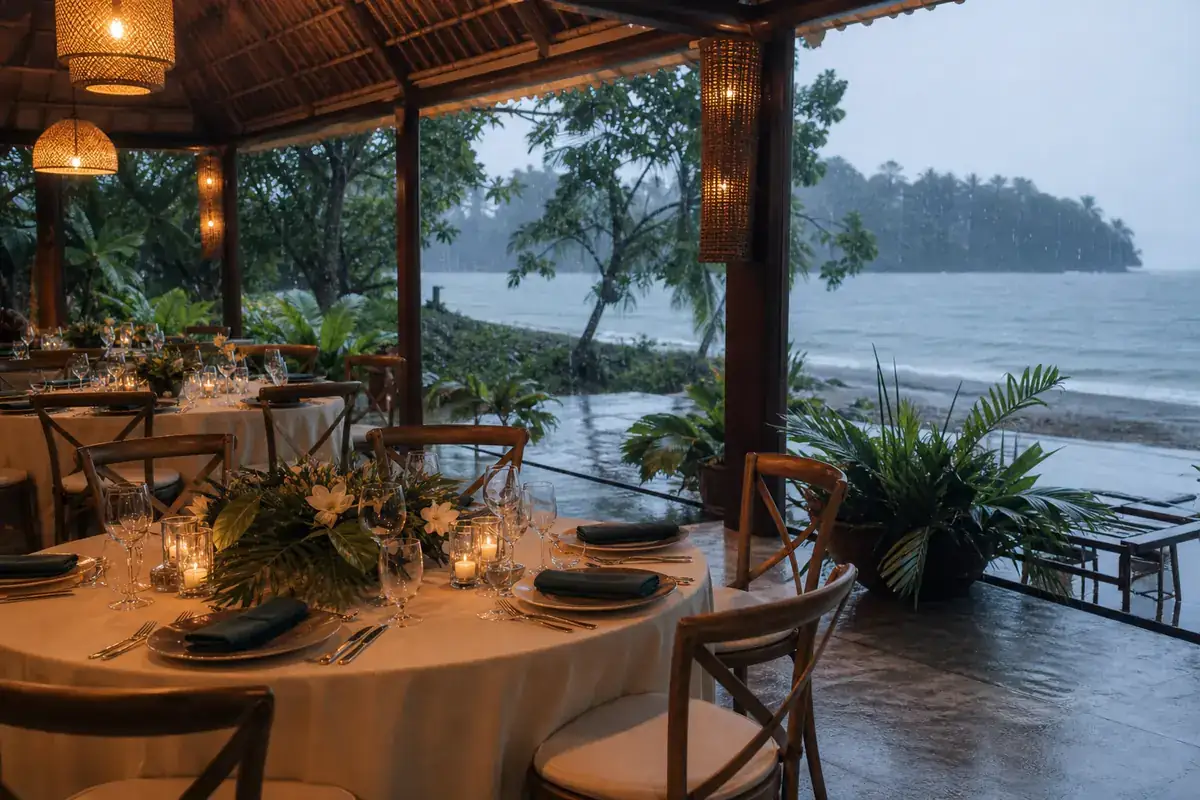
Rainier months can work with the right format
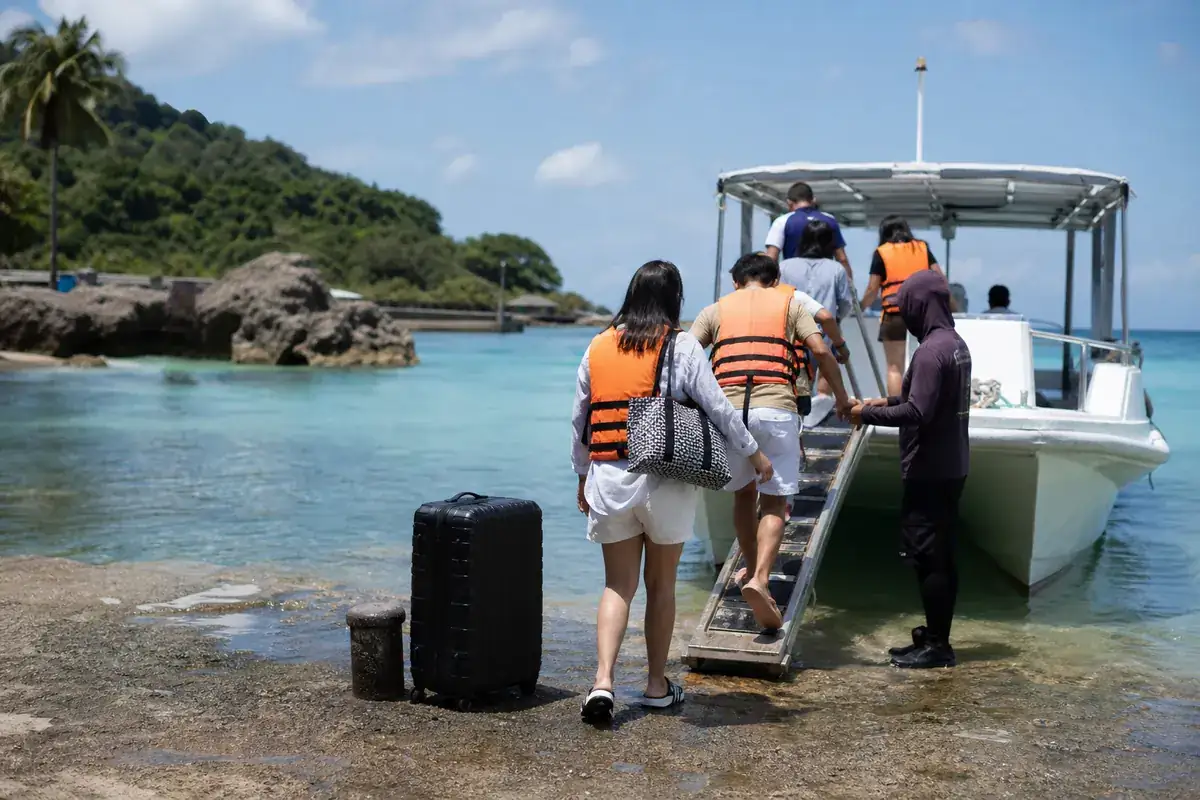
The manifesto treats June to October as a higher-rain and higher-typhoon-risk planning period, especially farther north. It may offer lower demand, but the project needs stronger transport buffers and a credible indoor option.
A rainier month is not automatically unsuitable. A resort-based dinner with a covered ceremony can be more resilient than a multi-leg marine plan, regardless of the calendar label.

04
Amihan, habagat and site exposure
Local planning commonly distinguishes amihan and habagat wind regimes, but the operational question is concrete: which shore is exposed, what the venue allows, and whether boats can operate safely.
Decor, sound, candles, shade structures and guest comfort must be designed for the selected site's exposure rather than copied from an image reference.

05
The five-day operating check
The manifesto standard begins active PAGASA monitoring five days before an event. The production plan also watches local forecasts, venue notices, transport operations and sea conditions where relevant.
The decision log names the information source, decision time, responsible lead, communication route and effects on decor, transport and catering.

06
What a real Plan B contains
A useful Plan B has a held or verified space, guest route, revised floor plan, production cut-off, supplier responsibilities and budget treatment. Telling guests to wait for a message is not a plan.
The visual direction should survive indoors. Materials, lighting and table layout are selected so the backup still feels intentional.
07
Sources, dates and update policy
This guide is an editorial planning aid, not an official forecast. It was updated on 21 July 2026 and should be reviewed whenever PAGASA guidance, destination rules or transport conditions change.
For an actual event, use the latest official advisories and the verified rules of the contracted venue and transport operators.
FAQ
Frequently asked questions
What is the safest month for a Boracay event?
No month is risk-free. The manifesto prefers January to April for early planning, but the event still needs a current forecast and Plan B.
Does the rainy season mean all-day rain?
Not necessarily. Rain timing and intensity vary, which is why a dated local forecast matters more than a generic label.
When is the weather decision made?
The project records a decision time appropriate to venue, setup and transport. PAGASA monitoring starts five days before the event under the manifesto standard.
Can a beach ceremony move indoors?
Yes, when a suitable backup is verified and included in the production plan before the event.
Are these live forecasts?
No. This is a dated planning guide updated 21 July 2026. Follow current PAGASA advisories for operational decisions.
Next useful step
Turn the idea into a verified route and estimate
Send the date window, format, island preference, guest count and budget range. We will clarify what is feasible before promising a location.