Full-service destination planning
Panglao weddings timed around privacy, tides and guest comfort
A destination wedding is a production project as much as a celebration: the location, guest route, weather decision, suppliers and budget must work as one system. Philippines Events builds that system around a transparent brief and an agreed Plan B.
01
Is Panglao right for your wedding?
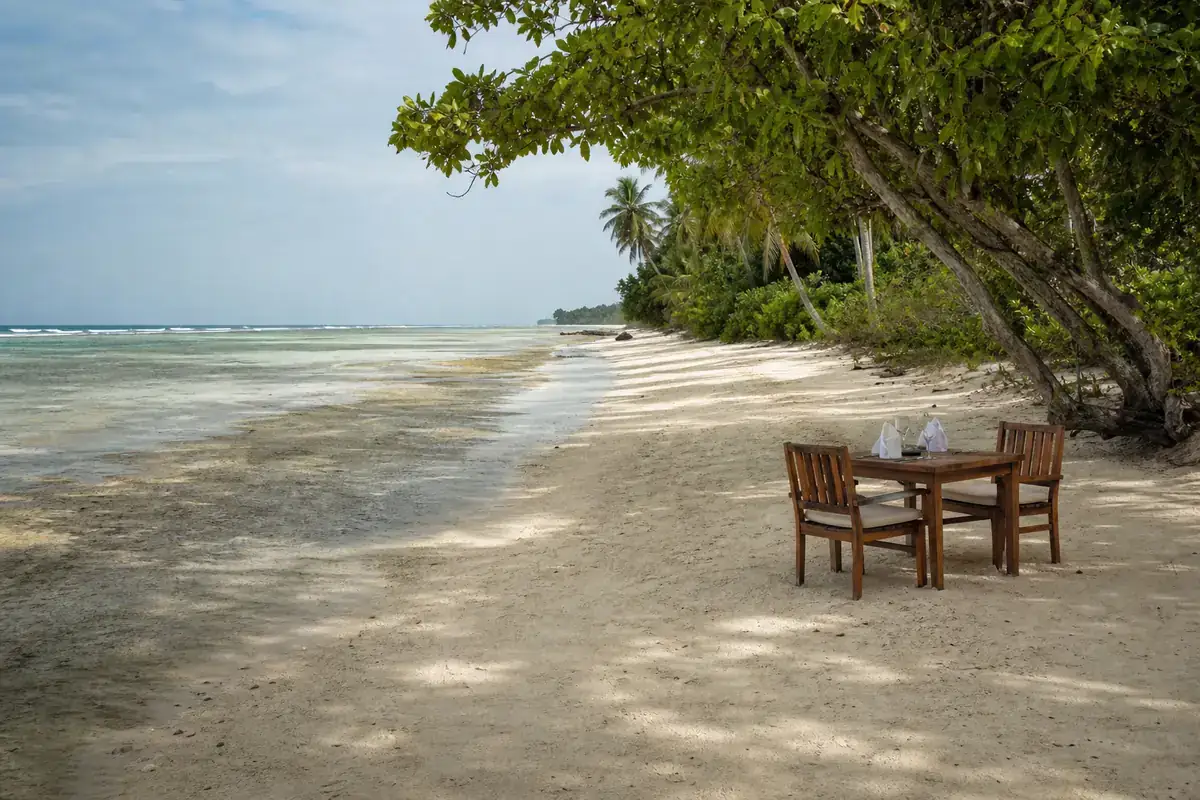
Panglao is a strong choice for small groups that prefer privacy, a slower rhythm and a program combining the coast with Bohol experiences.
The short list should make trade-offs visible. A more remote setting may need extra travel time; a compact resort destination can simplify logistics but offer less seclusion.
02
Wedding formats and published starting prices
The public figures below are the only starting prices used in early communication. They are not packages promised without a brief; they are planning thresholds before island, venue, season and production scope are known.
A detailed estimate separates the creative concept, venue, food and beverage, decor, technical production, team, transport and optional guest program so the client can make informed trade-offs.
| Format | Published starting price |
|---|---|
| Symbolic ceremony | from US$1,200 |
| Wedding for two | from US$1,500 |
| Yacht wedding | from US$3,500 |
| Wedding with guests | from US$8,000 |
| VIP wedding | from US$15,000 |

03
Location and guest logistics on Panglao
The island is served by TAG; the manifesto also uses a ferry from Cebu of about two hours as a planning baseline. Current schedules and group-transfer capacity must be checked before tickets are coordinated.
Before invitations are finalised, the plan maps arrival airports, transfer legs, luggage constraints, accessibility, hotel areas and the time guests need between travel and the event.
04
What full-service production covers
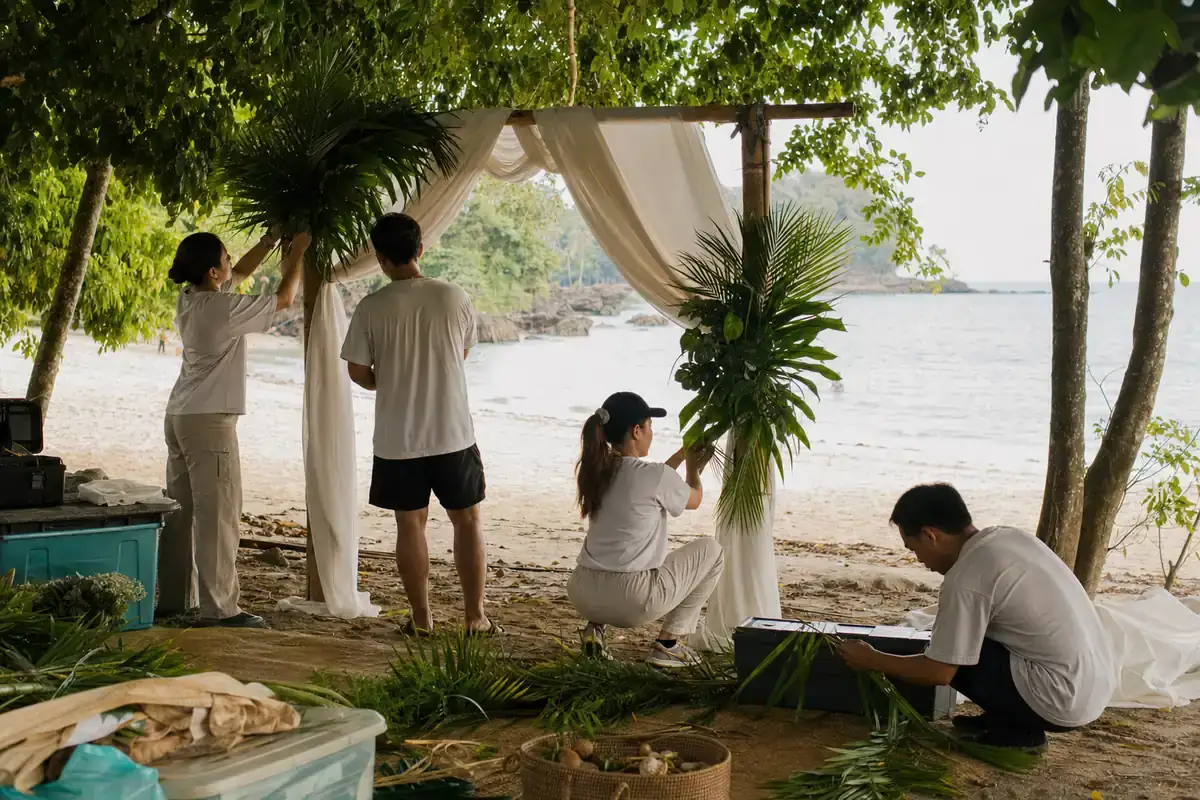
Full service means one coordinated production rather than a list of unrelated vendors. The scope can cover concept development, location checks, estimates, contracts, decor, technical requirements, catering coordination, guest movement and event-day management.
Every responsibility is named. If a supplier changes a condition, the project lead brings the effect on budget, quality and timing to the client together with alternatives.
- Creative direction built from the brief
- Location and supplier checks before presentation
- Transparent estimate and change control
- Guest and production logistics
- Event-day coordination with escalation paths
05
Weather, permissions and Plan B
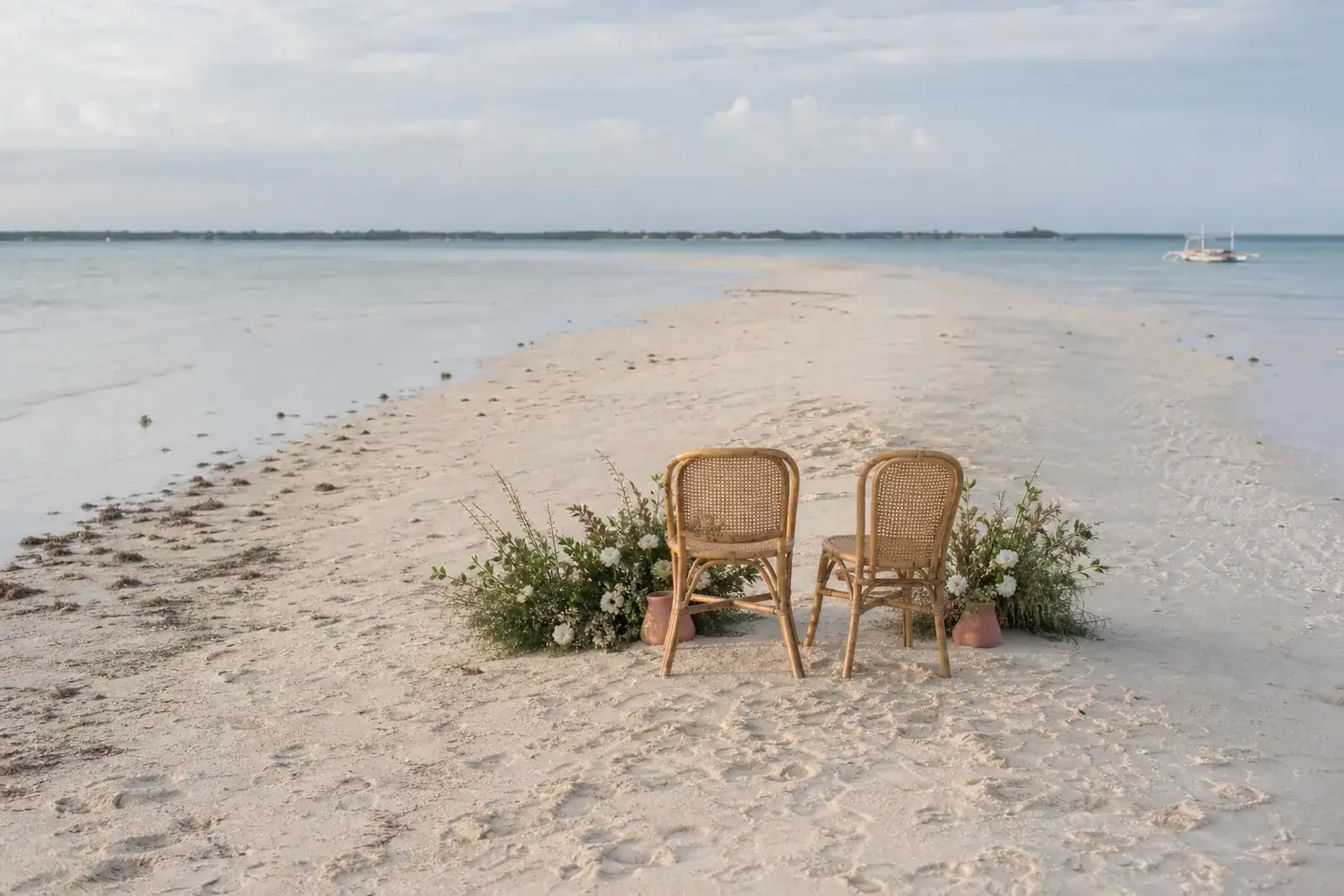
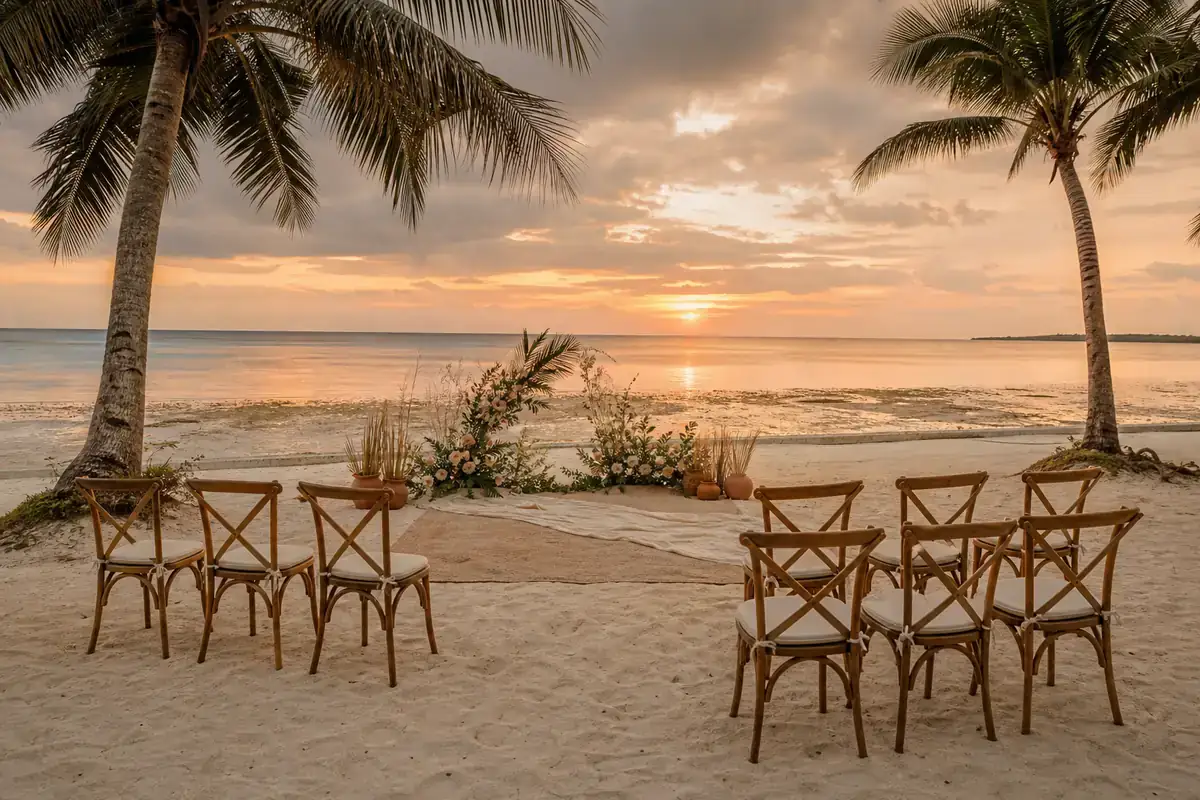
Sandbar concepts only work with the right tide window and acceptable sea conditions. The shoreline, access, permissions and a land-based alternative are checked before confirmation.
The national climate baseline is useful for early date selection, but it cannot replace a local forecast. The production team monitors current information and records who makes the final weather decision and when.
06
How planning moves from brief to event day
The first conversation defines the event format, date window, guest count, priorities and non-negotiables. The team then checks locations and suppliers before presenting a short list; availability is never implied before confirmation.
After the direction and budget are agreed, the project receives a detailed estimate, contract, production schedule, responsibility map and Plan B. The client sees changes before they affect the budget or timing.
- Brief and feasibility check
- Location and supplier verification
- Concept, estimate and contract
- Production schedule and guest logistics
- On-site coordination and agreed backup plan
VISUALS
Visual planning references
FAQ
Frequently asked questions
What is the published starting price?
A symbolic ceremony starts at US$1,200, a wedding for two at US$1,500, and a wedding with guests at US$8,000. Island, season, venue and scope change the final estimate.
How early should we start?
The manifesto planning baseline is three to six months; popular dates and villas may need six to twelve months. A small ceremony can sometimes be prepared in two to four weeks after feasibility is checked.
What happens if it rains?
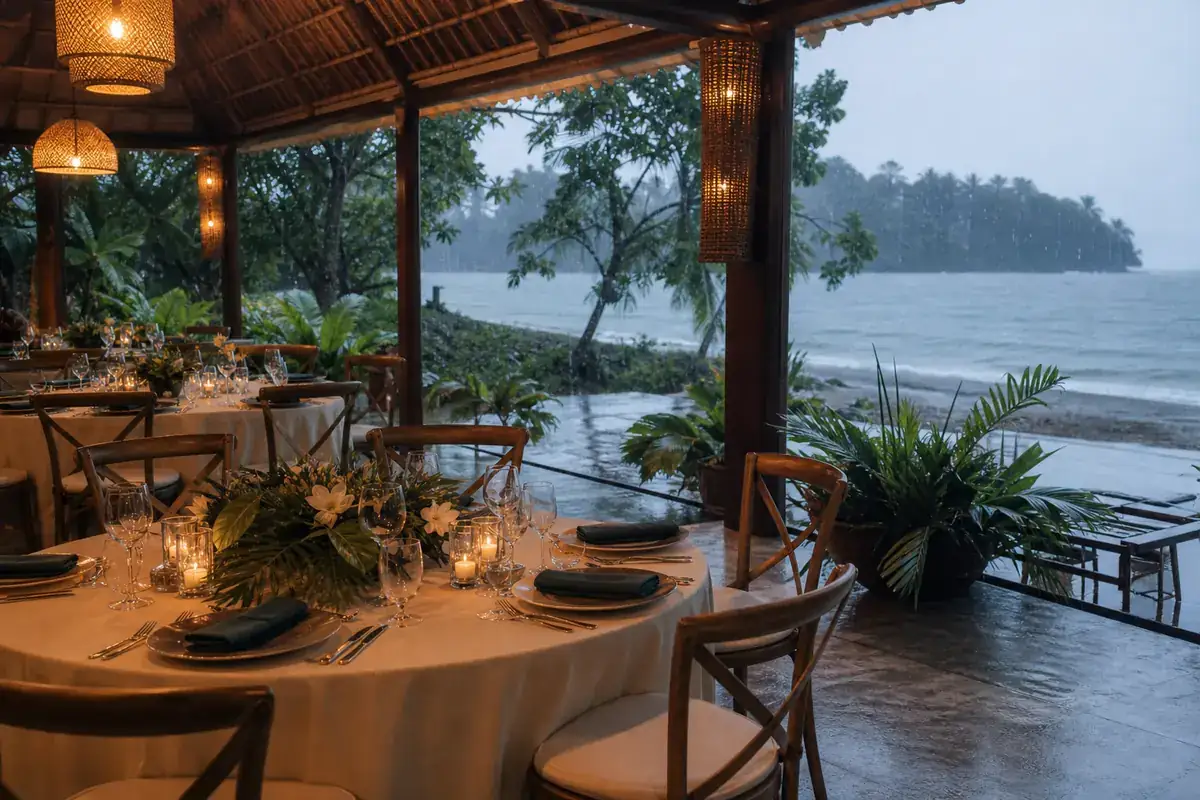
A covered or rescheduled alternative is agreed before the event. The operating decision is made against the current forecast, venue rules and safety conditions rather than a generic seasonal promise.
Can guests receive travel coordination?
Yes. The project can include arrival mapping, grouped transfers, accommodation guidance and a guest memo. Tickets and hotel rooms remain subject to current supplier availability.
Is this a real-event gallery?
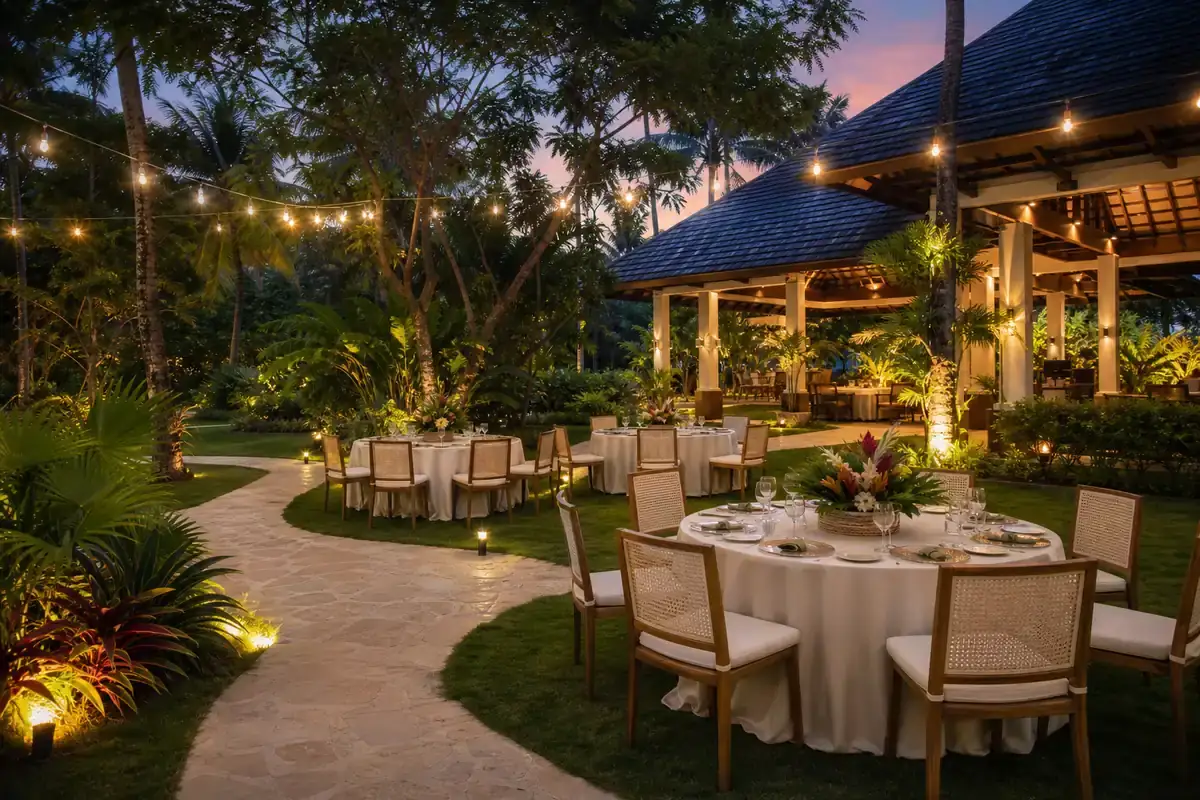
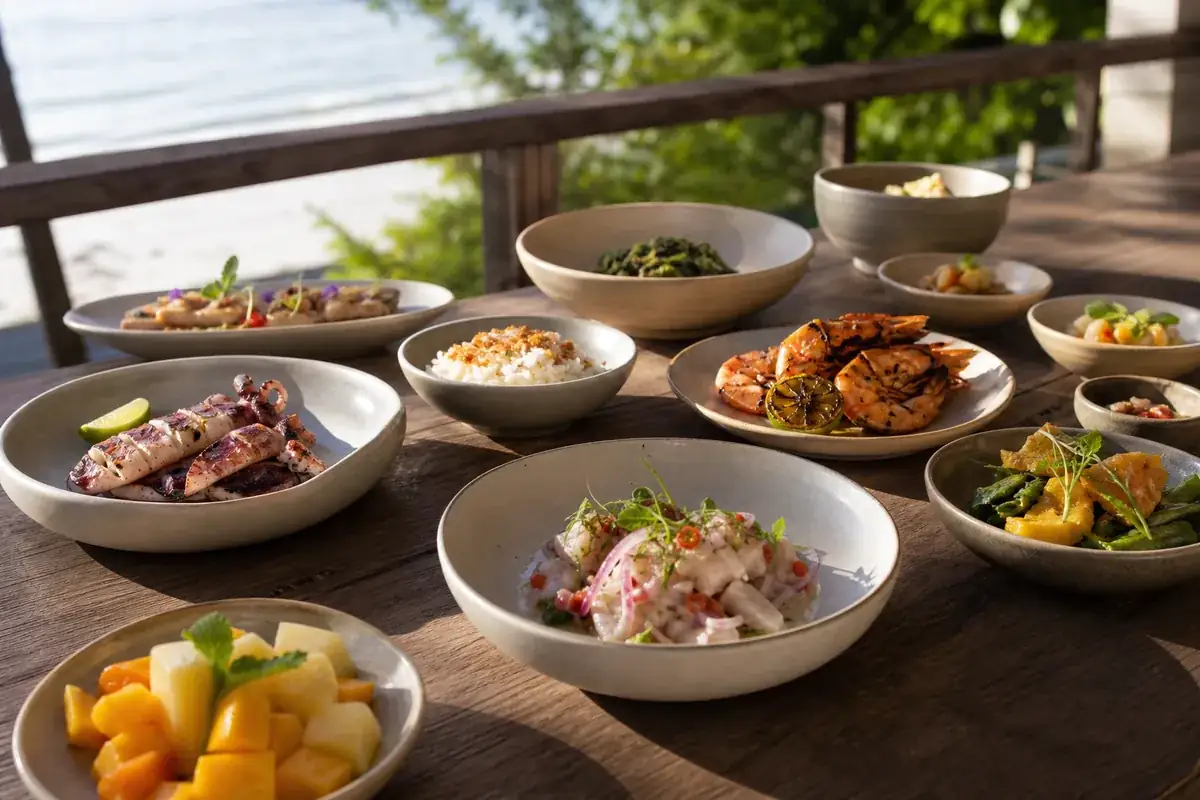
No client event is implied by the current concept images. Real cases are added only with client permission and are clearly identified as documentary work.
Next useful step
Turn the idea into a verified route and estimate
Send the date window, format, island preference, guest count and budget range. We will clarify what is feasible before promising a location.